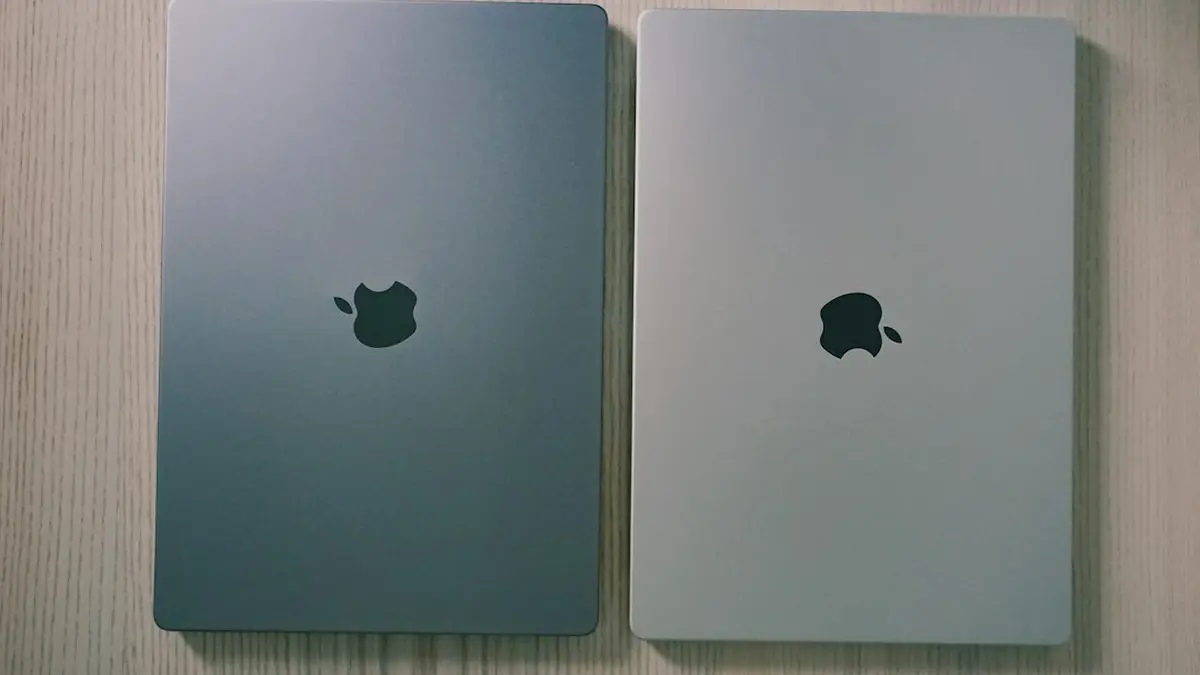
For local AI, buy the M5 Pro. The llama.cpp community figures dated October 19, 2026 show it processing prompts 3.7 times as fast as the M4 Pro and generating text 36 percent faster, and it costs 21 percent more at launch prices. For everything else the gap is about 11 to 13 percent in single-threaded work and 28 to 40 percent in multi-threaded work. On those figures the M4 Pro only wins on value if you can buy it for roughly $1,200 to $1,320, and nothing in the sources shows it at that price.
The other thing to know is that the $1,699 base M5 Pro and the machine most reviewers tested are not the same computer. Several of the big numbers below came from the 18-core CPU, 20-core GPU configuration, which costs $1,899 or more.
Spec for spec, and the published numbers
| Mac mini (M5 Pro, 2026) | Mac mini (M4 Pro, 2024) | |
|---|---|---|
| Released | September 22, 2026 | November 8, 2024 |
| US launch price, base | $1,699 (15-core CPU, 16-core GPU, 24GB / 512GB) | $1,399 (12-core CPU, 16-core GPU, 24GB / 512GB) |
| Full chip, 48GB, 1TB, 10GbE (Macworld) | $2,899 | $2,299 |
| CPU cores, base / top chip | 15 / 18 (6 super + 12 performance) | 12 / 14 (10 performance + 4 efficiency) |
| GPU cores, base / top chip | 16 / 20 | 16 / 20 |
| Neural Engine | 16-core | 16-core |
| Memory bandwidth | 307GB/s | 273GB/s |
| Unified memory | 24GB to 64GB | 24GB to 64GB |
| SSD | 512GB to 8TB | 512GB to 8TB |
| Rear ports (Macworld) | Three Thunderbolt 5 | Three Thunderbolt 5 (unchanged, per Macworld) |
| Geekbench 6 multi-core | 29,104 (The Verge, Sept 21, 2026) | 22,661 (Tom's Guide, Sept 21, 2026) |
| Geekbench 7 single-core | 3,691 (AppleInsider, Oct 5, 2026) | 3,322 (Geekbench Browser, Sept 24, 2026) |
| llama.cpp Llama 2 7B Q4_0, tg128 generation (llama.cpp community, Oct 19, 2026) | 67.6 tok/s | 49.6 tok/s |
| llama.cpp Llama 2 7B Q4_0, pp512 prompt processing (llama.cpp community, Oct 19, 2026) | 1,340 tok/s | 364 tok/s |
| Blender Benchmark, Metal, Blender 5.2.0 (Blender Open Data, Oct 19, 2026) | 3,643 samples/min | 2,570 samples/min |
| SSD write / read, Blackmagic Disk Speed Test (Fstoppers) | 11,956 / 12,231 MB/s (1TB unit) | 6,724 / 5,427 MB/s (2TB unit) |
The two Geekbench rows come from different publications, so read them as two results side by side and not as one test. The llama.cpp, Blender and Fstoppers storage rows each come from a single source. Ethernet and wireless are not in the table because the sources only describe them for the M5 Pro: 2.5GbE standard with a $100 10GbE option, and Apple's N1 chip for Wi-Fi 7 and Bluetooth 6, per Macworld. None of the sources gives the M4 Pro's figures for either. None of them confirms whether storage moved from removable to soldered between generations either, so this piece doesn't claim it.
Mac mini M5 Pro and M4 Pro in the hub
| Mac mini M5 Pro | Mac mini M4 Pro | |
|---|---|---|
| Price | $1,699Apple US price, 15-core CPU, 16-core GPU, 24GB / 512GB | $1,399launch price, 12-core CPU, 16-core GPU, 24GB / 512GB |
| Chip | Apple M5 Pro | Apple M4 Pro |
| CPU cores | 15 (5 super, 10 performance); 18 optional | 12 (8 performance, 4 efficiency); 14 optional |
| GPU cores | 16 | 16 |
| Memory (base) | 24 GB | 24 GB |
| Geekbench 6 CPUMulti-core, points | 29,104 | 22,661† |
| Local LLM (llama.cpp / Ollama)tg128 Llama 2 7B Q4_0, tok/s | 67.6 | 49.6 |
| Local LLM (llama.cpp / Ollama)pp512 Llama 2 7B Q4_0, tok/s | 1,340 | 364 |
| Blender Benchmarksamples/min | 3,643 | 2,570 |
| Buy | Check price on AmazonCheck price at Best Buy | Check price on AmazonCheck price at Best Buy |
Figures as published by Blender Open Data (Oct 19, 2026), The Verge (Sep 21, 2026), Tom's Guide (Sep 21, 2026), llama.cpp community benchmarks (GitHub) (Oct 19, 2026). † From another publication than the rest of its row, so not a like-for-like test. The best figure is marked where a row is all one source.
Compare every benchmark side by sideMac mini (M5 Pro, 2026)
The Mac mini (M5 Pro, 2026) starts at $1,699 with a 15-core CPU, 16-core GPU, 24GB and 512GB. Education pricing is $1,599, according to MacMyths. The full 18-core CPU and 20-core GPU chip adds $200, which makes $1,899 at 24GB, and Macworld's breakdown puts 48GB at another $600.
Macworld tested the same workloads on both generations and reports some of the cleanest numbers available. Against the M4 Pro, the M5 Pro was about 12 percent faster in Geekbench 7 single-core and 38 percent faster in multi-core, 11 and 40 percent faster in Cinebench 2026 single-core and multi-core, about 20 percent faster in GPU compute and 33 percent faster in Geekbench AI on the Neural Engine at low precision. It also took 41 percent less time in HandBrake VideoToolbox encodes. The GPU gain comes from the same 20 cores with about 12 percent more memory bandwidth. In its own Geekbench 6 runs, Fstoppers measured a median of 4,302 single-core and 29,137 multi-core on the 18-core unit, which it puts at 13.0 and 30.6 percent above published M4 Pro figures.
Storage throughput has roughly doubled. It also holds up under sustained load: Fstoppers ran 12 consecutive all-core x265 passes and saw only 3.5 percent drift, with idle noise at 5 dBA. It does get loud when gaming, according to Macworld, and Fstoppers' only listed con was the lack of AV1 hardware encoding. Expert Reviews ran MLPerf Client with Llama 3.1 8B and found it only a little ahead of a two-year-old laptop with a mobile Nvidia GPU. That's worth remembering before treating it as an AI workstation.
Buy it if you run local models, render or encode, and you would otherwise pay for the M4 Pro at anything near its launch price.
- Prompt processing 1,340 tok/s against 364 on the M4 Pro (llama.cpp community, Oct 19, 2026)
- Storage write and read more than doubled (Fstoppers)
- 3.5 percent drift over 12 sustained x265 passes (Fstoppers)
- $300 more than the M4 Pro at launch; $2,899 as Macworld configured it
- Loud under heavy gaming load (Macworld)
- No AV1 hardware encode (Fstoppers)
Mac mini (M4 Pro, 2024)
The Mac mini (M4 Pro, 2024) launched on November 8, 2024 at $1,399 with a 12-core CPU, 16-core GPU, 24GB and 512GB. Its top chip has 14 CPU cores (10 performance, 4 efficiency) and the same 20-core GPU ceiling as its successor, and it supports the same 64GB maximum and 8TB of storage. On paper, that means anything that fits in memory on the M5 Pro also fits here.
What it gives up is speed where it compounds. Its 364 tok/s prompt processing in the llama.cpp community table means long prompts and big pasted documents wait almost four times as long before the first token appears. Generation, at 49.6 tok/s, is still comfortably faster than anyone reads. Single-threaded work is only about 11 to 12 percent behind, so everyday use and most IDE work feel close.
The facts here do not include a November 2026 street price for the M4 Pro, and the hub carries only its launch price, so the value case below works from $1,399. Buy it if you find one priced well below that and your work is single-threaded or light on AI.
Where the money goes
There are three differences that matter, and their size depends heavily on the workload.
Prompt processing is the outlier. The 3.7x gap in pp512 is far bigger than any CPU or GPU core count change would explain. Generation is limited mainly by memory bandwidth, and 307GB/s against 273GB/s is a 12.5 percent increase, yet generation still rose 36 percent. One caveat: the hub figures don't record which chip configuration each community entry used, so it's unproven whether the base $1,699 machine matches them. More on the LLM inference leaderboard.
Multi-core and rendering scale with the extra cores. 14 to 18 cores on the top chip accounts for Macworld's 38 to 40 percent and Blender Open Data's 42 percent (3,643 against 2,570 samples/min). The base M5 Pro's 15 cores against the base M4 Pro's 12 is the same 25 percent increase in core count. The sources didn't benchmark that pairing separately.
Gaming is a footnote. The hub has no Cyberpunk 2077, Alan Wake 2 or Counter-Strike 2 frame rates for either Mac. Macworld measured the M5 Pro 52 percent ahead in Borderlands 3 at 4K High and 31 percent ahead in Total War: Warhammer III at 1080p High, while noting that it struggles at 4K and that Apple does not market the Mac mini for games.
Here is the break-even arithmetic: the M4 Pro price at which it gives the same performance per dollar as a $1,699 M5 Pro.
At what M4 Pro price the answer flips
M5 Pro at its $1,699 launch price, divided by its lead in each published result. Below the resulting price, the M4 Pro gives more of that result per dollar.
| Prompt processing, 1,340 / 364 tok/s (3.68x) | about $460 |
|---|---|
| Blender, 3,643 / 2,570 samples/min (1.42x) | $1,199 |
| Text generation, 67.6 / 49.6 tok/s (1.36x) | $1,247 |
| Geekbench 6 multi-core, 29,104 / 22,661, cross-source (1.28x) | $1,323 |
At its $1,399 launch price, the M4 Pro loses on every row. For AI work it loses badly. For general multi-core work it needs to drop below about $1,320 to come out ahead.
Apple's multipliers were about a different pair
Some comparison pages repeat Apple's own speedup figures as though they describe this upgrade. According to MacMyths' spec comparison, Apple's August 2026 performance claims compared M6 and M4 Mac mini systems, not the M5 Pro and M4 Pro, so they say nothing reliable about this pair. The sources here do not include any Apple marketing figures for M5 Pro against M4 Pro, and this piece doesn't quote any. The independent results in the table are the evidence. To check a vendor claim, you'd need the same app and project file run on both machines by one reviewer, which is what Macworld's percentages are.
Where the M6 sits
The Mac mini (M6, 2026) is the base model, not a Pro. It starts at $899 with 16GB and 256GB, up from $599 for the M4 model. Tom's Guide measured it at 21,405 in Geekbench 6 multi-core and 4,708 in single-core (September 21, 2026), and the same publication on the same date measured the M4 Pro at 22,661 multi-core. So the cheapest new Mac mini is within about 6 percent of the old Pro on that test and has more single-core headroom. However, it starts with less memory, and memory is what limits local models. The M6 against the M4 is its own comparison. If you came here for that one, this isn't it.
Verdict
If you run local LLMs, buy the M5 Pro, ideally with the $200 full-chip upgrade and as much memory as your models need. Both machines top out at 64GB, so the M4 Pro offers no capacity advantage to make up for being slower. The rule for how much memory a model gets applies equally to both.
For 3D rendering, video encoding and long code builds, buy the M5 Pro unless the M4 Pro is under about $1,200 to $1,320. At its $1,399 launch price it gives less performance per dollar.
For general use, writing and single-threaded work, the difference is about 11 to 12 percent. A discounted M4 Pro is fine, and so is the $899 M6.
If you already own an M4 Pro, keep it. Macworld's Jason Cross put it this way: "This is a good computer at a bad price, and it's not worth the upgrade if you're not in desperate need of one."
Best Buy listed the base M5 Pro at $1,599 when Macworld's review ran, so check current prices, and check the price on Amazon.
Mac mini (M5 Pro, 2026)
- Geekbench 6 CPU Single-core 4,294 points The Verge, Sep 21, 2026
- Geekbench 6 CPU Multi-core 29,104 points The Verge, Sep 21, 2026
Mac mini (M4 Pro, 2024)
- Geekbench 6 CPU Multi-core 22,661 points Tom's Guide, Sep 21, 2026
- Geekbench 7 CPU Single-core 3,322 points Geekbench Browser, Sep 24, 2026
Comments
No comments yet. Be the first to comment!
Leave a Comment