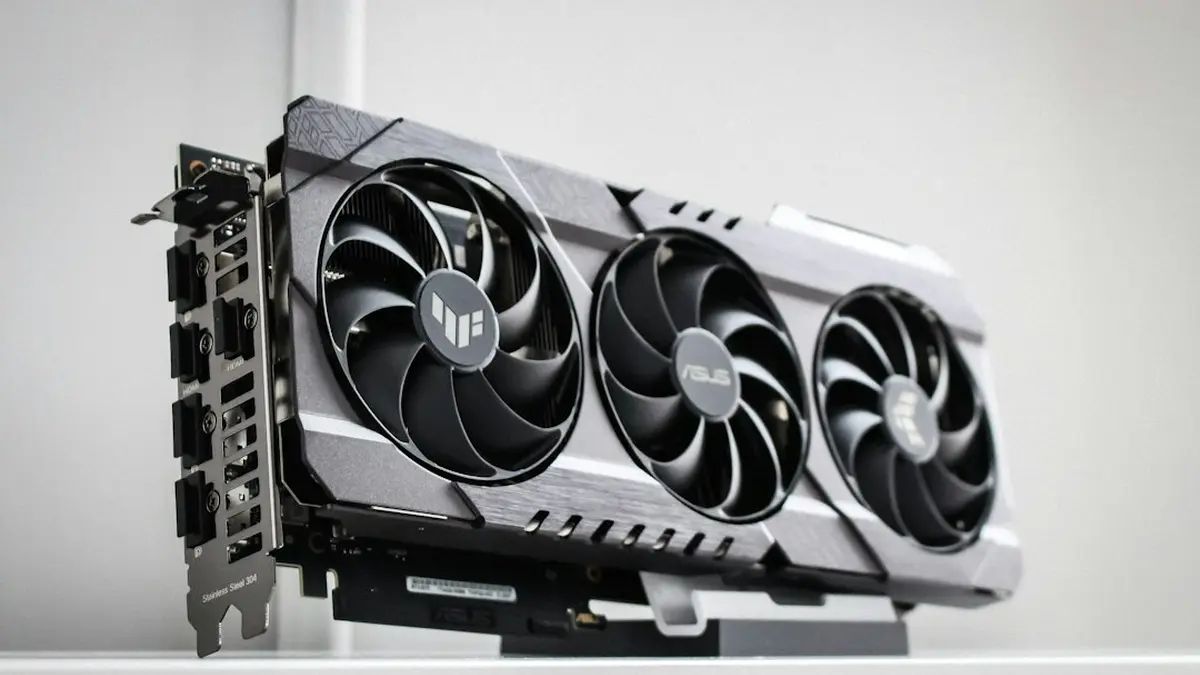
The RTX 5070 is the faster card. In Tom's Hardware's Cyberpunk 2077 figures it leads by 11 percent at 1440p Ultra and 24 percent with ray tracing, and Club386 found it more than twice as fast in Blender. The RX 9070 GRE is the better buy only when it costs clearly less. At its reported $499 low against a $549 RTX 5070, the two cost almost exactly the same per 1440p frame, so Nvidia's lead in ray tracing, DLSS and AI decides it.
Both cards launched at $549, the RTX 5070 on March 5, 2025 and the GRE in the US on June 2, 2026, after a year on sale only in China. Their prices have not matched since. Every figure below comes from the publication that measured it, with the date that publication gives. Where outlets disagree, and on this matchup they disagree a lot, the piece says so rather than averaging them.
Spec sheet and published results
| Spec or result | AMD Radeon RX 9070 GRE | NVIDIA GeForce RTX 5070 |
|---|---|---|
| US launch date | June 2, 2026 | March 5, 2025 |
| Launch price | $549 | $549 (Founders Edition) |
| Memory | 12GB GDDR6 | 12GB GDDR7 |
| Memory bandwidth, Tom's Hardware | 432 GB/s | 672 GB/s |
| Upscaling and frame generation, Club386 | FSR 4, no multi-frame generation | DLSS with 4x multi-frame generation |
| Cyberpunk 2077 1080p Ultra, Tom's Hardware | 100 fps (June 2, 2026) | 119 fps (June 24, 2026) |
| Cyberpunk 2077 1440p Ultra, Tom's Hardware | 62.6 fps (June 2, 2026) | 69.3 fps (June 24, 2026) |
| Cyberpunk 2077 4K Ultra, Tom's Hardware | 26.8 fps (June 2, 2026) | 31 fps (June 24, 2026) |
| Cyberpunk 2077 1440p Ultra + Ultra RT, Tom's Hardware | 33.8 fps (June 2, 2026) | 41.8 fps (June 24, 2026) |
| Price at Club386's review | $549.99 (Sapphire Pulse OC) | $599 |
| Lowest reported price | $499, Tom's Hardware | $529.99 at Newegg after a $20 code (ZOTAC Twin Edge OC), TweakTown |
| Price per 1440p Ultra frame at $549 launch price | $8.77 | $7.92 |
The Cyberpunk numbers come from two Tom's Hardware pages, published three weeks apart: the GRE's own review (ray tracing on page 5) and the GPU hierarchy for the RTX 5070. Same outlet, same game, same presets. They are on the Cyberpunk 2077 leaderboard with the rest of the field.
Some things a full spec sheet would carry are missing from the sources here: die size, transistor counts, ROP and TMU counts, the RTX 5070's core counts and board power, 1% lows, thermals, measured system power, and Passmark or 3DMark scores. None of the reviews cited in this piece publish them, so the table leaves them out rather than guessing.
Side by side in the hub
| RX 9070 GRE | RTX 5070 | |
|---|---|---|
| Price | $549US launch price, June 2026 (sold in China only from May 2025) | $549launch price, Founders Edition (NVIDIA) |
| GPU | Navi 48 | GB205 |
| Architecture | RDNA 4 | Blackwell |
| Shaders | 3072 | 6144 |
| Boost clock | 2790 MHz | 2510 MHz |
| Cyberpunk 20771080p Ultra, fps | 100 | 119 |
| Cyberpunk 20771440p Ultra, fps | 62.6 | 69.3 |
| Cyberpunk 20774K Ultra, fps | 26.8 | 31 |
| Cyberpunk 20771440p Ultra + Ultra RT, fps | 33.8 | 41.8 |
| Alan Wake 21440p Ultra, fps | 48.9 | 53.6 |
| Black Myth: Wukong1440p Very High, fps | 48.4 | 52.6 |
| Buy | Check price on AmazonCheck price at Best Buy | Check price on AmazonCheck price at Best Buy |
Figures as published by Tom's Hardware (Jun 2, 2026), Tom's Hardware (Jun 2, 2026), Tom's Hardware (Jun 24, 2026). The best figure is marked where a row is all one source.
Compare every benchmark side by sideAMD Radeon RX 9070 GRE
The RX 9070 GRE is cut down from RDNA 4. According to AMD's launch specs as reported by Wccftech, it has 48 compute units, 48 third-generation ray accelerators, 96 second-generation AI accelerators, a 2.79GHz boost clock, and 12GB of GDDR6 on a 192-bit bus, all within a 220W board power. Wccftech gives the bandwidth as about 482 GB/s. Tom's Hardware gives 432 GB/s, which is what 18 Gbps across 192 bits actually works out to. AMD set the US price at $549, the same launch price as the full RX 9070, which is a strange way to price the smaller card.
Tom's Hardware's review called it "thoroughly midrange" and found its 12GB already limiting some titles at 1440p. Notebookcheck's roundup of early Chinese reviews put it about 15 percent behind the RX 9070 in games and 18 percent behind at 4K, and blamed the 33 percent bandwidth deficit.
Its best results are in rasterized games. Club386 had it winning Total War: Warhammer III by 4 to 9 percent and within 3 fps in Assassin's Creed Shadows. TechSpot found the two cards virtually identical. Price is its real argument. Tom's Hardware reported a drop to $499, its lowest price yet and below launch MSRP, and PC Gamer called it "the only sub-MSRP graphics card around today." Neither article's date could be confirmed, so check the price on Amazon or Newegg before you rely on it.
Buy it if you play rasterized games at 1440p and can get it for $499, or for any price more than about 10 percent below an RTX 5070.
- Reported at $499, its lowest price and below the $549 launch MSRP (Tom's Hardware)
- Won Total War: Warhammer III by 4 to 9 percent and was within 3 fps in Assassin's Creed Shadows (Club386)
- Virtually level with the RTX 5070 in TechSpot's suite
- 220W board power (AMD, via Wccftech)
- 24 percent behind in Cyberpunk 2077 1440p Ultra + Ultra RT (Tom's Hardware)
- RTX 5070 more than twice as fast in Blender and far ahead in Llama 3.1 (Club386)
- 432 GB/s of bandwidth against 672 GB/s (Tom's Hardware)
- 12GB already limiting in some games at 1440p (Tom's Hardware)
NVIDIA GeForce RTX 5070
The RTX 5070 has the same 12GB, but in GDDR7 at 672 GB/s, 56 percent more bandwidth than the GRE per Tom's Hardware. In Club386's suite it averaged 3 to 4 percent faster, leaving out frame-generated results. It led Final Fantasy XIV: Dawntrail by 9 to 14 percent, Rainbow Six Siege by 6 percent, and Forza Horizon 6 with ray tracing by 7 percent at 1080p and 2 percent at 1440p. In Cyberpunk 2077 RT Ultra it led by 11 to 15 percent natively and 6 to 9 percent with DLSS against FSR 4. With frame generation added, both cards averaged about 60 fps. The RTX 5070's 4x multi-frame generation can go higher, at the cost of up to 12ms of extra input latency, according to Club386. More frames on the counter, and a little more delay in what you actually feel.
The bigger gap is outside games. Club386 measured the RTX 5070 at more than twice the GRE's speed in Blender and "far higher" in Llama 3.1 token generation. It did not publish the tokens-per-second figures in the material cited here, so the hub's LLM inference table and Blender leaderboard are where to check models that have been measured.
Its price has moved around much more than the GRE's. Wccftech saw it at $629 when the GRE launched, and Tom's Hardware saw it near $650. Club386 paid $599. TweakTown later reported Newegg listings at $549.99 for MSI and ASUS models and $529.99 for a ZOTAC after a promo code. The only November figure comes from GPU Poet, which tracks eBay listings, not retailers: listings started at $860 and the lowest daily average was $795. At Best Buy the RTX 5070 is currently cheapest inside a prebuilt. An iBUYPOWER Element with a Ryzen 7 9700F was $1,799.99 on November 8, 2026, and an MSI Aegis ZS2 with a Ryzen 9 9900X was $2,249.99 as the November 17 Deal of the Day.
Buy it if you turn on ray tracing, rely on DLSS, or run local models or Blender, and you can get it within about $60 of the GRE.
AMD Radeon RX 9070 GRE
- Cyberpunk 2077 1080p Ultra 100 fps Tom's Hardware, Jun 2, 2026
- Cyberpunk 2077 1440p Ultra 62.6 fps Tom's Hardware, Jun 2, 2026
NVIDIA GeForce RTX 5070
- Cyberpunk 2077 1080p Ultra 119 fps Tom's Hardware, Jun 24, 2026
- Cyberpunk 2077 1440p Ultra 69.3 fps Tom's Hardware, Jun 24, 2026
Ray tracing, AI, and the price gap
How big the raster gap is depends on who measured it. It is 11 percent at 1440p in Tom's Hardware's Cyberpunk figures, 5 to 10 percent in Tom's roundup of early reviews, about 4 percent in Notebookcheck's aggregate (9 percent at 4K), 3 to 4 percent at Club386 and roughly zero at TechSpot. Tom's 19 percent at 1080p is the outlier. Take the RTX 5070 as a single-digit-percent faster card in most games and you will not be far off.
Ray tracing is where it opens up, and the size depends on the game. Cyberpunk 2077 is the worst case for AMD: 24 percent at Tom's Hardware and 11 to 15 percent at Club386. In Assassin's Creed Shadows and F1 24, Expreview's data (via Notebookcheck) showed the two roughly level, which is why the Tom's roundup headline says ray tracing is "on par." Both statements are true. They just tested different games.
For local AI there is no contest. More than twice as fast in Blender and well ahead in Llama 3.1, per Club386. Both cards have 12GB, so the RTX 5070 runs the same models faster but cannot fit bigger ones. If model size is the limit, check what fits before you choose either card.
All of which turns into a price question. Using Tom's Hardware's Cyberpunk numbers, here is where each card wins on price per frame.
Where the answer flips
Price divided by Tom's Hardware's Cyberpunk 2077 1440p Ultra result (GRE 62.6 fps, RTX 5070 69.3 fps; with Ultra RT, 33.8 and 41.8 fps). Break-even is the RTX 5070 price at which its cost per frame matches the GRE's.
| RX 9070 GRE at $549 launch price | $8.77 per frame |
|---|---|
| RX 9070 GRE at $499 reported low | $7.97 per frame |
| RTX 5070 at $549 launch price | $7.92 per frame |
| RTX 5070 at $599, Club386's review price | $8.64 per frame |
| RTX 5070 at $795, GPU Poet's November 2026 eBay low average | $11.47 per frame |
| Break-even RTX 5070 price vs a $549 GRE (raster / RT) | $608 / $679 |
| Break-even RTX 5070 price vs a $499 GRE (raster / RT) | $552 / $617 |
For raster frames, the RTX 5070 is the better value until it costs about 11 percent more than the GRE. With ray tracing on, that rises to about 24 percent. Using Club386's 3 to 4 percent average instead, a gap of about $20 on a $549 GRE already favors AMD. These are figures for Cyberpunk at 1440p, so how far you trust them depends on how much of your playing looks like Cyberpunk.
Which 1440p card wins on cost per frame across the whole field?
The same price-per-frame arithmetic, run for every card that reaches 60 fps at 1440p.
See the 1440p value rankingWhich to buy
If the two are within about $50 of each other, buy the RTX 5070. It is a little faster in most games, much faster in Cyberpunk-style ray tracing, has DLSS multi-frame generation, and is more than twice as fast for Blender and well ahead for local LLMs.
Buy the RX 9070 GRE if you play rasterized games at 1440p, don't care about AI work, and it is at least $55 to $60 cheaper than an RTX 5070. At $499 against a $549 RTX 5070 the cost per frame is the same, and on Club386's numbers the GRE comes out ahead. If the RTX 5070 is still at the $795-plus that eBay listings showed this month, the GRE wins on price alone.
The GRE has one more problem. It launched at the full RX 9070's $549 with about 15 percent less performance. If an RX 9070 is close to the GRE's price, buy that instead: it beat the RTX 5070 in its own comparison, 11 percent faster on Tom's Hardware's geomeans and with 16GB. To check both cards against today's prices, use the compare tool.
Comments
No comments yet. Be the first to comment!
Leave a Comment